Unisex Sciatica Leg Wrap with Enhanced Joint Stability and Compression for Hips FHM01
Couldn't load pickup availability
- Comprehensive Support for Hip and Thigh Pain
- Breathable, Comfortable, and Durable
- Adjustable Tension for Customized Compression
- Relieves Hip and Groin Pain Effectively
- Helps Improve Hip Alignment and Posture
Specifically Designed for:
- Sports Injuries Triggered by Strenuous Joint Movements
- Joint Stiffness Due to Prolonged Sitting
- Discomfort from Cold and Chills in the Hip Bone
- Ideal Holiday Gift for Family and Friends
-
Incorrect Posture Causes Muscle Strain


Sciatica Leg Wrap Product Features
· Double the Pressure to Relieve Discomfort: By moderately increasing the pressure stimulus and activating the body's self-regulation mechanism, it can effectively disperse pain perception, soothe muscle tension, and achieve rapid relief of discomfort symptoms within a controlled range.
· Stabilizes the Hip Joint and Reduces Pressure on the Hip: The scientifically designed stabilized acetabular structure effectively disperses the pressure on the hip, provides continuous stable support for the hip, relieves discomfort and improves comfort during activities.
· Sports Protection Hip Belt: Hip brace is made of breathable material, designed to fit the curve of the hip, adjustable Velcro for precise fixation, effectively cushioning the impact of sports, reducing muscle strain, and contributing to the safety and protection of sports.
Hip Brace Care
1. Pre-application inspection: Before use, inspect the hip brace for damage like breaks, cracks, or elastic failure. Replace it immediately if issues such as surface cracks, deformed sponge, or broken straps are found to prevent loss of protection from brace failure. Also, ensure the protective gear fits properly: too tight restricts blood circulation and movement, while too loose fails to protect effectively. The brace should attach firmly to the buttocks without causing obvious strangulation or sliding.
2. Correct Wearing Method: Wear the hip brace according to the instructions, align its center with hip stress points (e.g., tailbone, sciatic area), then adjust fixation straps step-by-step. Ensure even tension to prevent over-tightening or looseness. The straps should allow 1-2 fingers to fit comfortably for ideal elasticity, keeping the hip brace stable during exercise without shifting.
3. Pre-exercise Adaptation: When first using a hip protection sports brace, start with a short, low-intensity warm-up to test its fit and comfort during movement. Observe for friction, pressure, or other discomforts. If the hip brace causes obvious skin friction or pressure points, adjust the wearing position or switch to a more suitable model immediately to prevent prolonged skin damage.
4. Storage Requirements: When not in use, the hip brace should be stored in a dry, ventilated environment, avoiding contact with sharp objects to prevent scratching or puncturing the surface of the brace. At the same time, do not fold or squeeze the protective gear for a long time, so as not to damage the internal structure and elasticity, affecting the protective effect. It can be stored flat or hanging

FAQs
What Is a Hip Abduction Brace?
A hip abduction brace is a medical device designed to stabilize the hip joint and control the movement of the femur (thigh bone), specifically limiting adduction (inward movement) and promoting abduction (outward movement) of the hip. It typically consists of rigid or semi-rigid frames, straps, and padding that wrap around the pelvis, thighs, and sometimes the waist, securing the hip in a controlled, slightly abducted position.
For adults, this hip thigh support brace is primarily used in several scenarios:
Post-surgical recovery: After hip replacement, fracture repair, or labral tear surgery, it prevents excessive movement that could disrupt healing, reduce dislocation risk, and maintain proper alignment.
Hip instability: Individuals with conditions like hip dysplasia, recurrent dislocations, or muscle weakness (e.g., from neurological disorders) rely on it to stabilize the joint during daily activities.
Rehabilitation: It aids in retraining proper hip mechanics by restricting harmful movements while allowing gradual, controlled range-of-motion exercises.
The hip and leg brace is custom-fit or adjusted to each patient’s needs, balancing immobilization with comfort to support healing and functional recovery.
How to Reduce Hip Pain?
Hip pain can significantly affect daily life, but combining targeted strategies with a hip brace can effectively relieve discomfort. Here’s a practical guide:
- Use a Hip Brace Appropriately
A well-fitted hip brace provides stability, reduces excessive movement, and supports the joint, especially for conditions like muscle strain, mild arthritis, or post-injury recovery. Choose a breathable, adjustable design to avoid restricting circulation. Wear it during activities that trigger pain (e.g., walking, standing for long periods) but remove it periodically to prevent muscle weakness from prolonged immobilization.
- Modify Activities & Posture
Avoid high-impact exercises (running, jumping) that strain the hip; opt for low-impact options like swimming or cycling instead.
Maintain good posture: Sit with feet flat on the floor, avoid crossing legs, and use a lumbar roll to support the lower back (poor posture can aggravate hip pressure).
Take frequent breaks if you sit or stand for long hours, and stretch gently to release tension.
- Strengthen & Stretch the Hips
Strengthening exercises: Clamshells (lie on your side, bend knees, and lift the top knee while keeping feet together) and glute bridges (lie on your back, lift hips to engage glutes) help stabilize the hip muscles.
Stretching: Gentle stretches for the hip flexors (e.g., lunges with a forward lean) and hamstrings (sit and reach for your toes) improve flexibility and reduce tightness.
By combining a hip and thigh support with these strategies, you can alleviate hip pain, improve mobility, and prevent recurrence.
Can You Sleep in a Hip Brace?
Yes, you can sleep in a hip brace. Whether you can sleep in a hip brace depends on your specific condition, the type of brace, and your doctor’s recommendations.
When It May Be Recommended
Post-surgical recovery: After hip replacement, fracture repair, or procedures to address instability, doctors often advise wearing a hip brace for sleeping. It prevents excessive movement (e.g., rolling onto the operated side) that could disrupt healing or cause dislocation, especially in the first 4–6 weeks post-op.
Hip instability or recurrent dislocations: For adults with conditions like hip dysplasia or chronic instability, a lightweight, low-profile brace can stabilize the joint during sleep, reducing the risk of painful dislocations.
Tips for Safe Nighttime Use
Follow medical guidance: Always consult your doctor or physical therapist first—they’ll specify if nighttime wear is necessary and for how long.
Choose a sleep-friendly brace: Opt for lightweight, breathable materials (e.g., neoprene with mesh panels) and adjustable straps to balance support and comfort.
Check for comfort: Ensure the sciatica brace support doesn’t pinch, rub, or limit circulation. If you wake up with numbness, soreness, or increased pain, adjust or remove it.
Combine with proper positioning: Sleep on your back with a pillow between your knees (or on the non-painful side with a pillow between your legs) to reduce hip strain, even with a brace.
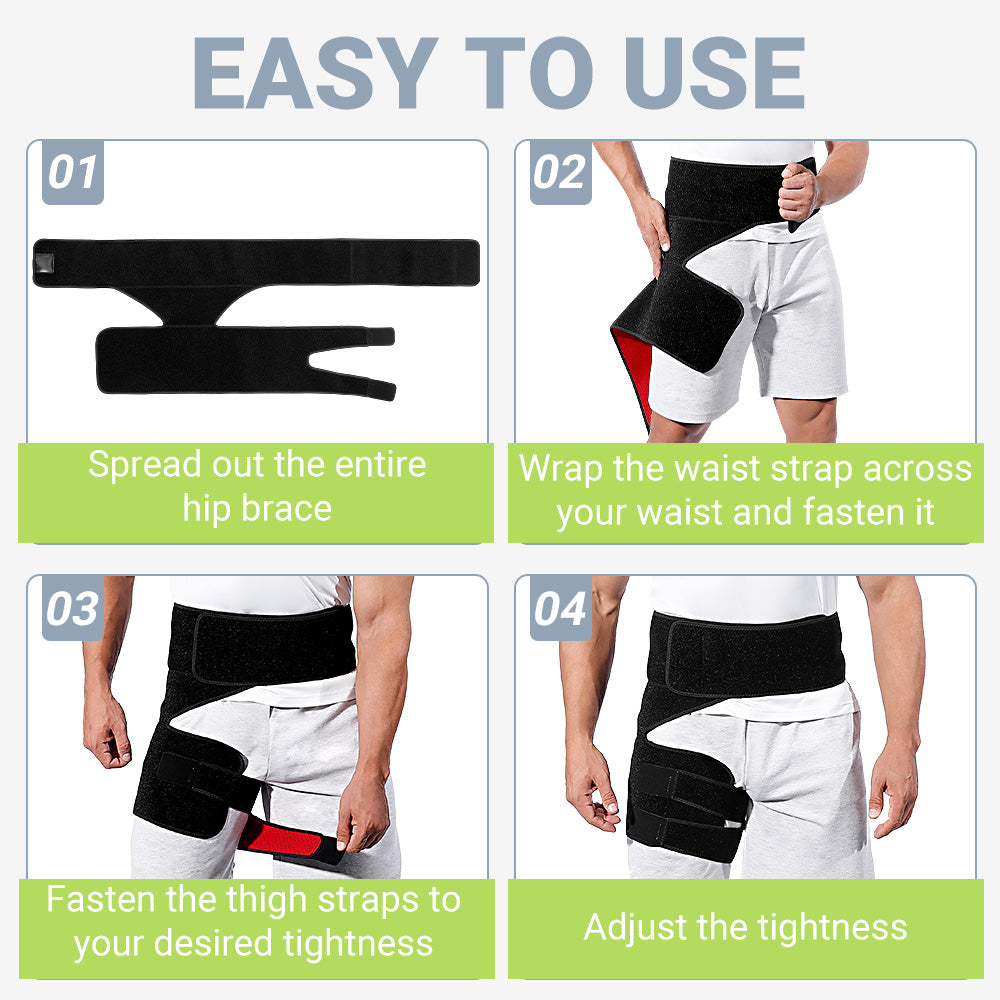
How to Wear Hip Brace?
Correctly worn hip braces can effectively disperse the impact of external forces, avoiding injuries to the hips and tailbone in sports or accidents, and are particularly suitable for high-intensity activities such as skiing and cycling. A snug fit reduces friction, prevents skin abrasion and redness, and maintains breathability and comfort, enhancing the flexibility of movement. Incorrect wear can easily lead to displacement, protection failure, and even cause secondary injuries, so mastering the correct method is the key to playing the protective role of hip protection.
Spread out the entire hip brace
Wrap the waist strap across your waist and fasten it
Fasten the thigh straps to your desired tightness
Adjust the tightness
Finished
Featured collection
-
Adjustable Tennis Elbow Strap for Injury Prevention – 2 Pack
Regular price $39.99 USDRegular priceSale price $39.99 USD -
Tennis Elbow Band Offer Arm Support, Pressure Relief – 2 Pack
Regular price $39.99 USDRegular priceSale price $39.99 USD -
Elbow Pads with Compression Straps Prevent Elbow Injury – 2 Pack
Regular price $49.99 USDRegular priceSale price $49.99 USD -
Compression Elbow Sling for Pain Relief and Recovery
Regular price $54.99 USDRegular priceSale price $54.99 USD